

Japanese whaling ships leave ports to hunt for whales
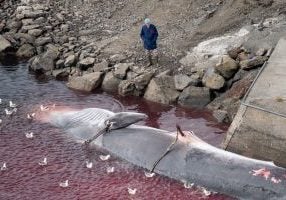
Two commercial whaling vessels departed on the 10th and 11th of June from the Japanese ports of Shimonoseki and Innoshima to kill up to 187 Bryde’s whales and 25 sei whales.
Japan resumed commercial whaling three years ago after leaving the International Whaling Commission (IWC - the body that regulates whaling) and following widespread international criticism condemning Japanese ‘scientific whaling’ in the Antarctic region.
Now Japanese whalers have set sail to hunt a total of 171 minke whales, 187 Bryde's whales and 25 sei whales. Japan conducts commercial whaling within its 200-mile Exclusive Economic Zone (EEZ) in the Pacific Ocean. The 2019 whaling season saw 150 whales slaughtered and last year, 187 Bryde's, 25 sei and 44 minke whales were killed.
The whaling ship Yushin Maru No. 3 and the whaling mothership Nisshin Maru will begin the hunts on the 15th of June. Both are expected to return to the port of Shimonoseki in mid November.
This cruel practice continues despite a dramatic decline in whale meat consumption in Japan. Only a small but influential group of politicians and whaling industry stakeholders drive the country’s whaling interests. In 2020, the Japanese government subsidised its struggling whaling industry with over 5 billion Yen (nearly £40m).

Both history and current practice show that whaling can never be sustainable, controllable or humane. Yet few people, let alone governments, are aware that recovering whale populations can help fight the damage we cause.
Will you make a donation to help us keep fighting to stop whaling?
[shariff]