



How to untangle a whale

Scottish seas were once a safe haven for whales and dolphins, but today, fishing gear, noise and pollution have made these waters dangerous for the whales and dolphins who live here or travel through. Alongside my role at the WDC Scottish Dolphin Centre, I volunteer to free whales who become entangled. I want to share my experiences with you to show you why we need your help to Restore Scottish Seas.
On Monday 4th November, the call came in: a possible humpback whale caught in ropes in Loch Fyne on the West coast of Scotland. I travelled through the night with the Large Whale Disentanglement Team (LWDT) of British Divers Marine Life Rescue (BDMLR), to be on scene before first light. By morning, our fully equipped rescue boats were launched, and we headed out to sea to locate the entangled individual. We were lucky - the sea was flat and calm with no wind, making it easier to spot the whale.

The poor whale looked exhausted, floating limp at the surface. We needed to work quickly to assess the entanglement. But before we could attempt the rescue, we had to assess this humpback’s temperament. Large whales are extremely powerful and can easily flip a small boat, so we gave the individual time to get accustomed to our presence.

The entanglement was quite complex - loose wraps slipped and moved around on their body, while tight ropes were wrapped around their head and through their mouth, making feeding near impossible. Once we understood how the lines were positioned around the humpback, we devised a cutting plan and got to work.

Every cut had to be carefully considered - as you cut one rope, it can change the position of another, meaning you have to rethink the entire plan. Slowly but surely, we worked through the tangled rope, removing it piece by piece. Finally, we cut the last line. At first, it took a while before the whale realised they were free, but then, she or he swam off into the open sea. We were elated - our extensive training and hard work had paid off.

A surge of entanglements
Fast forward to the end of January, and the team received another call - this time to the Isle of Skye, where a humpback was caught in rope near a fish farm. This entanglement was more complex than it first appeared, but after a challenging procedure, we successfully freed the whale.
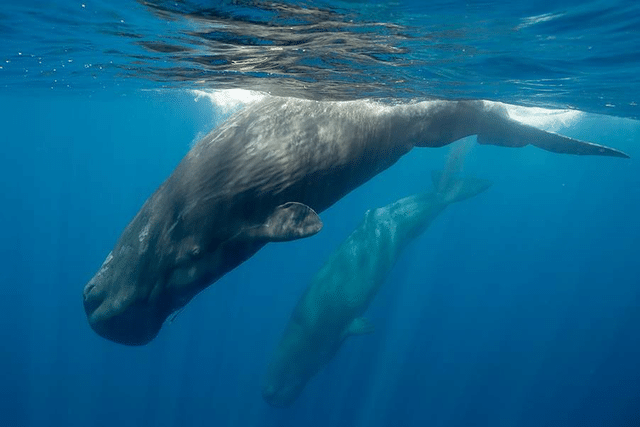
This marked the beginning of a mad few weeks, with reports of three more entangled whales. The first, thankfully, was a false alarm – a whale with visible scarring from a past entanglement. The second was cut free by local fishers before we arrived. And the last was a very unusual call: a sperm whale! This was a first for the team and perhaps the most risky call out to date. When approached, a sperm whale’s instinct is to protect themselves, and as enormous, powerful beings, we had to take extra care.

No whale should have to suffer like this.
Over two exhausting days, we managed to remove some of the ropes from this fast-moving individual. But then, the weather turned, forcing us to abandon the rescue. Tragically, this sperm whale was so severely wrapped in creel rope that, despite our best efforts, we were unable to save him. Just a few days later, the whale washed up on the shore and died. It was truly heartbreaking to see such a majestic being struggling - an image that will stay with me for a long time.

We need to restore Scottish seas
The entanglements we responded to were caused by a mixture of ghost gear - fishing gear that has been lost or abandoned - unidentified marine debris, and creel ropes. It saddens me that we as humans cause so much suffering to the amazing beings we share our world with. But we can do more to prevent entanglements.

In partnership with the Scottish Entanglement Alliance, WDC have already worked with Scottish creel fishers to trial new, low-cost fishing rope which sinks between creels (the pots used to catch lobsters and crabs) rather than floats. We’ve proved that these sinking lines reduce entanglements and save lives, and we want to support their roll out to other fisheries to save even more lives. We’ve also got plans to lobby the Scottish and UK governments to make it free for fishers to dispose of old, lost or abandoned fishing gear – removing the deadly underwater labyrinths these awesome beings navigate. Stay tuned over the coming weeks to find out how you can help make these plans a reality.

Until then, wherever you live, we’re all connected by one world ocean, and the things you do locally will benefit whales and dolphins in the waters around Scotland and all around the UK. Head down to your local beach, town or city and take part in a local clean-up to stop litter from ending up in the ocean. If you choose to eat fish, make informed and responsible choices about the fish you buy. If you happen to own a boat, secure any loose rope or equipment on deck so it can’t get washed overboard. And if you encounter an entangled whale, please don’t try to free them yourself, give the Large Whale Disentanglement Team a call on the 24-hour Rescue Hotline: 01825 765546.
Together, we can restore Scottish seas and make them safe for whales and dolphins once again.